




LAUGFS diversified into the industrial tyre industry in 2008 with a specialised focus on industrial solid tyres. Its state-of-the-art manufacturing plant at Horana is one of the most modern tyre manufacturing plants in Sri Lanka, producing solid tyres to international standards.
LAUGFS Rubber exports its products to 35 key international markets, including the United States, Germany, France, Belgium, Spain, Portugal and Brazil. It also has offices in the Netherlands and United States exclusively for the distribution of LAUGFS industrial tyres.

What are Industrial Tyres?
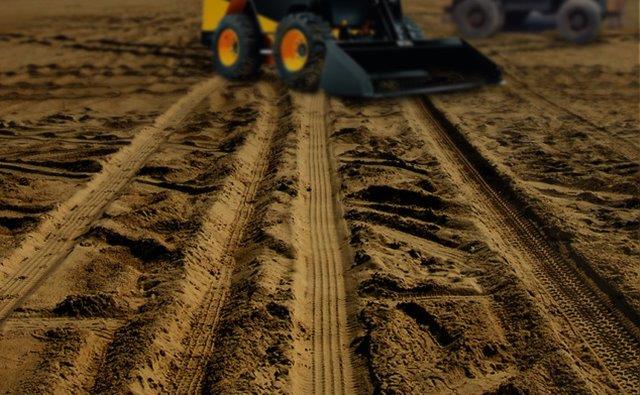
Solid tyres are used for industrial vehicles such as material handling equipment and excavators, and are usually much heavier than tyres we see on normal passenger vehicles on the road. An industrial tyre manufactured by LAUGFS Rubber could weigh anywhere up to 480kg, compared to a mere 5kg to 6kg tyre typically used for a passenger car.
These industrial tyres are also manufactured in different categories to suit the specific needs of different industries. For instance “non-marking tyres”, which are white or grey in colour, are used by food processing, chemical as well as pharmaceutical industries, since they don’t leave tyre marks on factory floors.
“Oil-resistant tyres” are used by oil and gas industries, since they are especially designed to withstand damage caused by constant exposure to oil. “Cut-resistant tyres” are manufactured with a unique compound formula to suit glass industries and junk yards, while “heat-resistant tyres” have been developed with unique properties that enable them to effectively operate in high temperatures of industries such as the metal industry. Similarly, there is a vast range of solid tyres manufactured to cater to the many different applications and functional requirements of different industries.

Leading with Innovation
The science behind industrial tyres is truly incredible. Innovation, R&D and technology are constant buzz words at LAUGFS Rubber, as they play a vital and integral role in the company’s daily operations.
So, why is R&D and innovation so important to LAUGFS Rubber? Each tyre is manufactured to a specific secret formulation of compounds. This determines the uniqueness of the product, its durability, price and performance. The countless range of unique features and categories inevitably means there is continuous R&D work carried out.
This R&D work primarily focuses on three critical areas – enhancing the compounds of existing products for better performance, new product development, and process improvements.
R&D work in new product development usually focuses on catering to changing industry needs and expanding the product portfolio to meet market gaps. Process improvements focus on improving efficiencies and effectiveness of the production process.
LAUGFS Rubber’s state-of-the-art manufacturing plant has the facility to design and develop tyres for specific client requirements. This means, LAUGFS’s R&D team is able to handle the entire end-to-end process of delivering new products, customised to suit industry requirements; from developing new compound formulas for materials to simulating the performance of newly designed tyres.
While the R&D team is hard at work on the innovation process, LAUGFS Rubber is continuously working towards strengthening its systems and processes to deliver efficiencies and precision of its products, while minimising its impact on the environment. Apart from ISO 9001:2015, it has also received the ISO 140001:2015 certification for environmental management for the strong processes in place to minimise its environmental footprint. The R&D team at LAUGFS is constantly working on effective ways to use high quality recycled material, while maintaining and enhancing the quality of solid tyre products. It also has its own Effluent Treatment Plant (ETP) for water purification, where waste water is treated and used for gardens.
LAUGFS Rubber’s remarkable energy management systems have also received the ISO 50001:2011 certification. It is currently in the process of installing solar panels on its factory roof, which will cater to up to 60% of the factory’s energy requirement. We will hear more of this in weeks to come…
About The Author
